CLIENT COUNTERBELL (INVENTED BRAND) · CUSTOMER STORY · 16:9 STORY, TESTIMONIAL 16:9 AND 9:16, 3 CLIPS, CAPTIONS, CHAPTERS, STEMS · 2:51 · 2026
Customer story forCounterbell (concept)
The Second Chair: a barber tells how the app answers his phone while he cuts. A 2:51 interview story, a testimonial in 16:9 and 9:16, and three vertical clips.
Dramatization. Counterbell and Second Chair Barbers are fictional brands made for this portfolio piece, and Andre is an AI-generated character with a synthetic voice. Every figure in the story and in the app comes from the trade or from the fiction, and the interface was built for the video. What was generated is listed at the end.
secondchair-story-16x9.mp4 · 1920×1080 · 24 fps · 2:51 · −14.3 LUFS integrated, measured on the delivered file
The brief
Counterbell has its first customers, and we want one of them to tell the story in his own words. Andre owns a two-chair barbershop in Columbus and cuts alone; the phone used to be his second, unpaid job. We need a customer story of two to three minutes in 16:9 that feels like a documentary interview, a testimonial of about fifty seconds in 16:9 and 9:16, and three vertical clips of 24 to 30 seconds, one idea each, with burned-in captions. For the long story: captions as .srt and .vtt, chapters, a version without music and the sound as stems. The product should appear the way he lives with it: on his phone, on the tablet at his station, in his customers' hands. English only.
Process
Write the interview before asking for anything.
The interview came first: 434 words written to sound remembered, with a restart and a few fillers left in on purpose and the interviewer's questions shaping each answer. Every cut of the six videos was planned on that page before any material was asked for: which line is on camera, which one plays over the picture, which one is the product. The same words feed every video, and each one keeps a different part of them.
THE IDEA IN ONE SENTENCE
His voice keeps talking while the picture goes where his words go, and comes back to his face.
THE TRANSCRIPT, MARKED
“Four o'clock is my busiest hour.” Opens the story, the testimonial and the first clip on frame 0, over the clipper in a fade.
“Every call I miss, that's a haircut I didn't do.” The cost in his own unit; it opens both verticals because it works with no context.
“I mean, I... you can't even be mad.” The restart stays: it is how people remember out loud. Too slow for the short cuts.
“Dad, where's your phone?” The emotional peak, in the last fifth of the story, where the customer stories we measured put it.
“Cut hair. That's the job.” The whole idea in five words; it closes the testimonial and the third clip.
One man, one room.
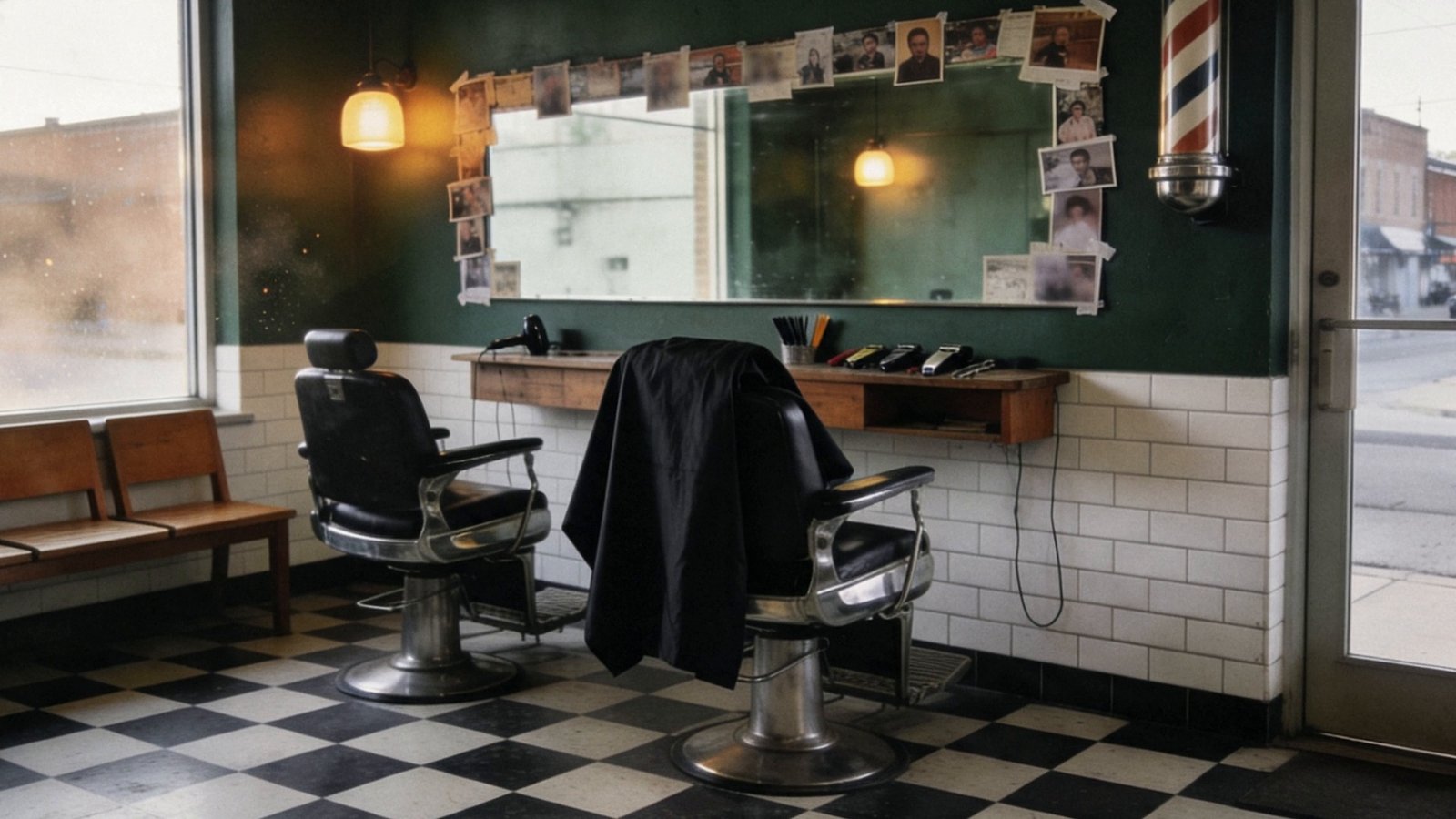
A character sheet of Andre and one plate of his shop, then two interview frames, a medium and a close-up, with his eyes to the left of the lens. Every on-camera moment starts from one of those two frames, so the face, the light, the shirt and the room hold across all 17, and the two angles alternate like a two-camera interview.
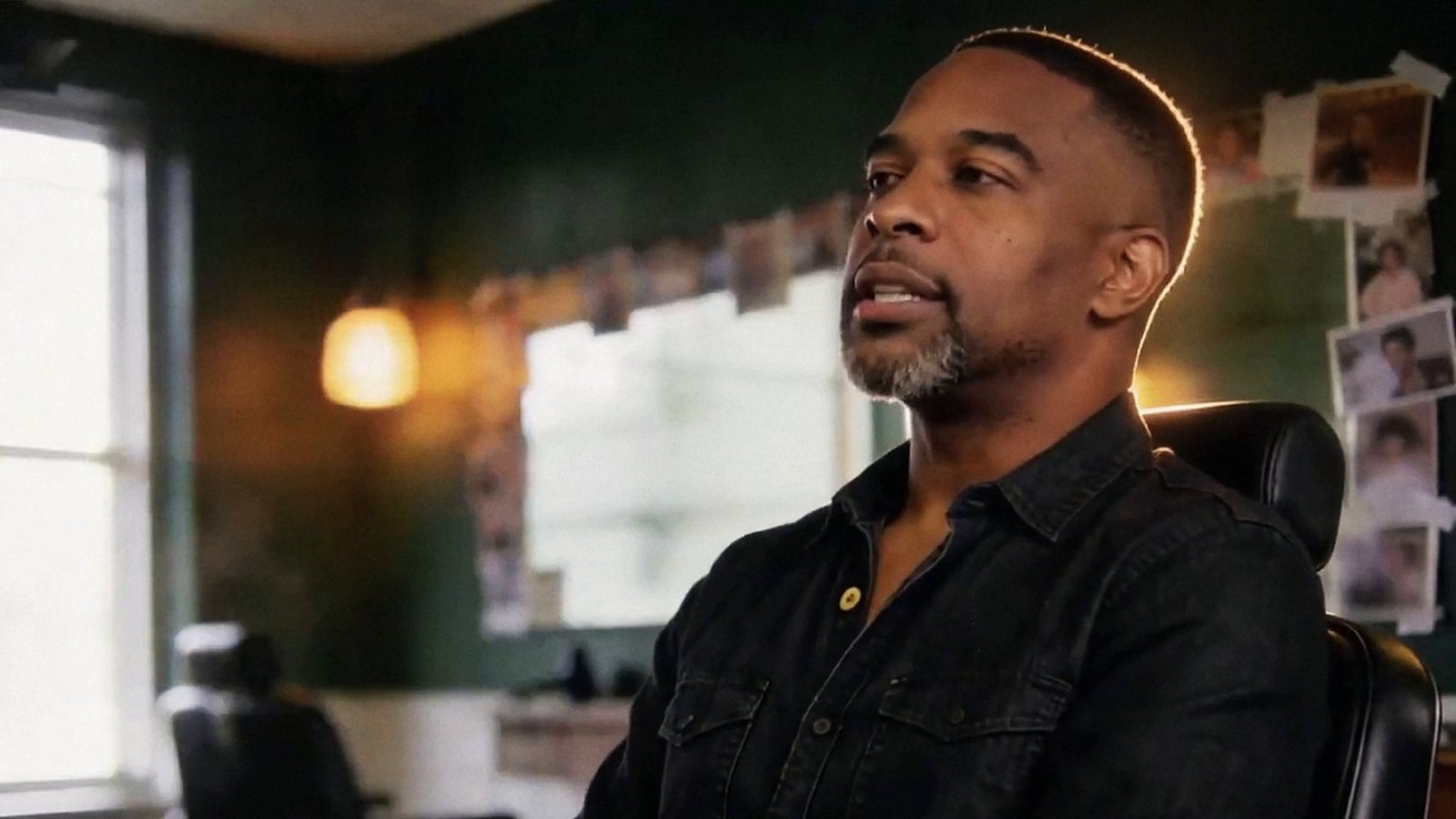
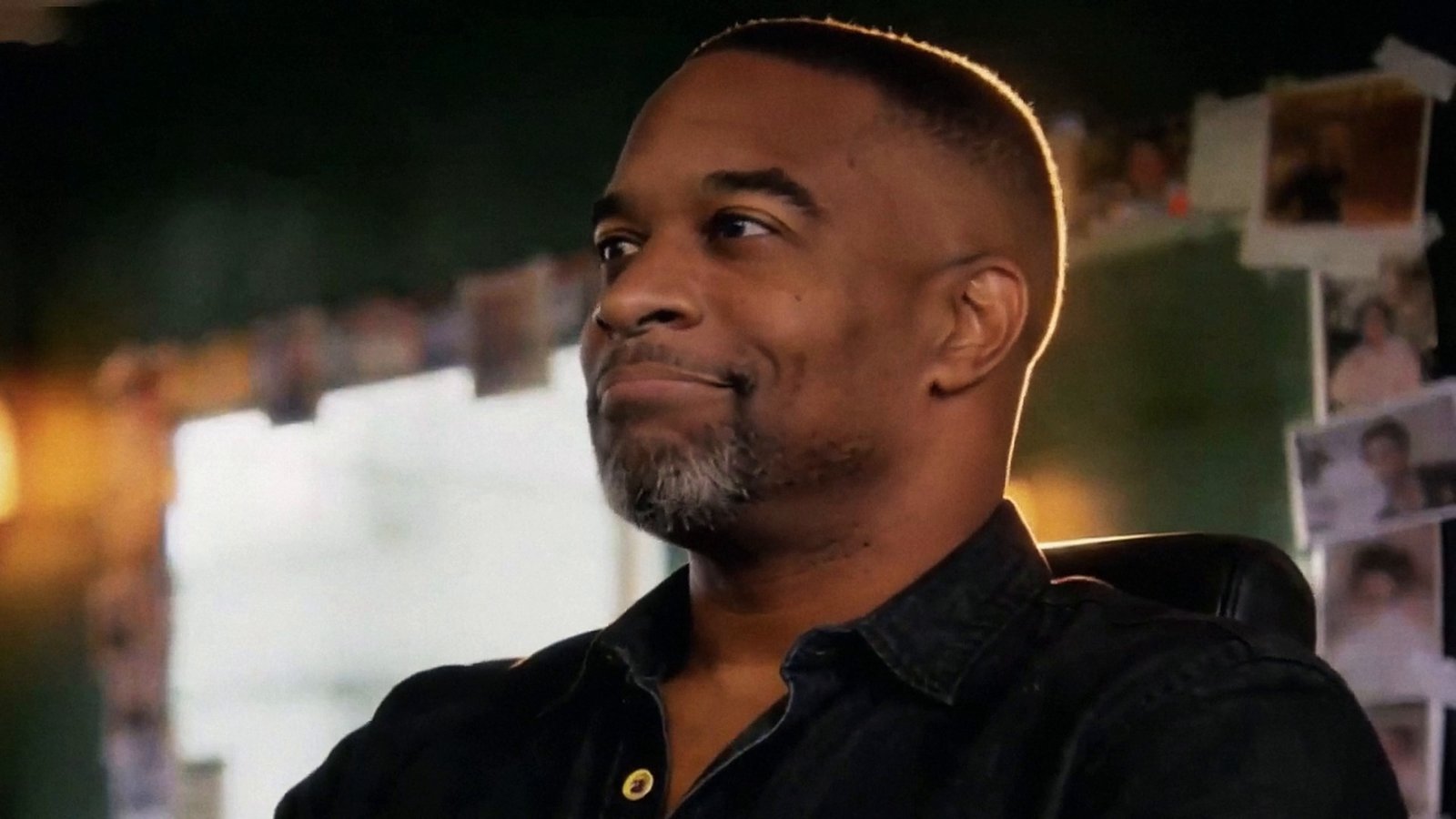
One voice, placed on his mouth.
His voice was cast over three measured rounds and fixed once. Every line over the picture is said in it, and every on-camera moment carries the same voice placed on the mouth's own timing, word by word, then checked by forced alignment: lip drift of 0 ms at the median and 20 ms at the worst word across all 17 moments, inside the −45 / +125 ms tolerance. Here, four moments as generated and as finished, each heard both ways.

AS GENERATED AND FINISHED · FOUR MOMENTS · EACH HEARD BOTH WAYS · 0:13
B-roll that says what the voice leaves out.
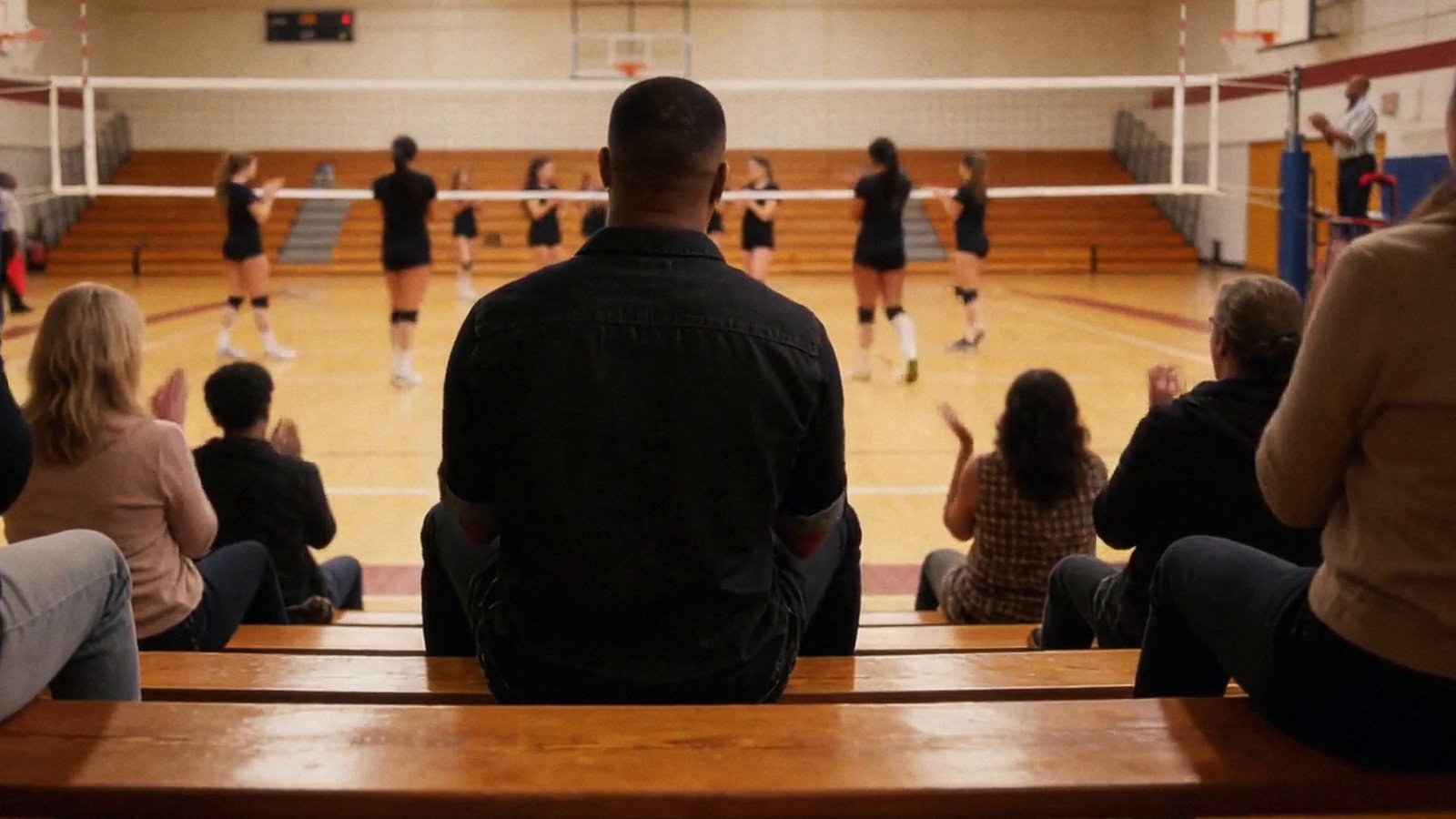
His hands on a fade, the blind going up, the empty chair at 9:30, his cousin on the phone, the boy with his name cut in, the bleachers at his daughter's game: from the same sheet and the same shop, each place with a sound of its own. Every return to his face comes from B-roll (13), a product insert (3) or the other camera angle (1), so every cut in the interview stays hidden.
The phone and the tablet, in Blender.
The phone is the same one as in Counterbell's launch video, with its model, lights and materials, and the tablet was built for his station. They sit on plates of the station, a café table, a bus stop bench, a kitchen table and the waiting bench. The interface was recorded frame by frame on a virtual clock and placed into each screen in linear light at the corners Blender projects, so each tap and message lands on the word that names it: 0 frames off in the four actions of the story.
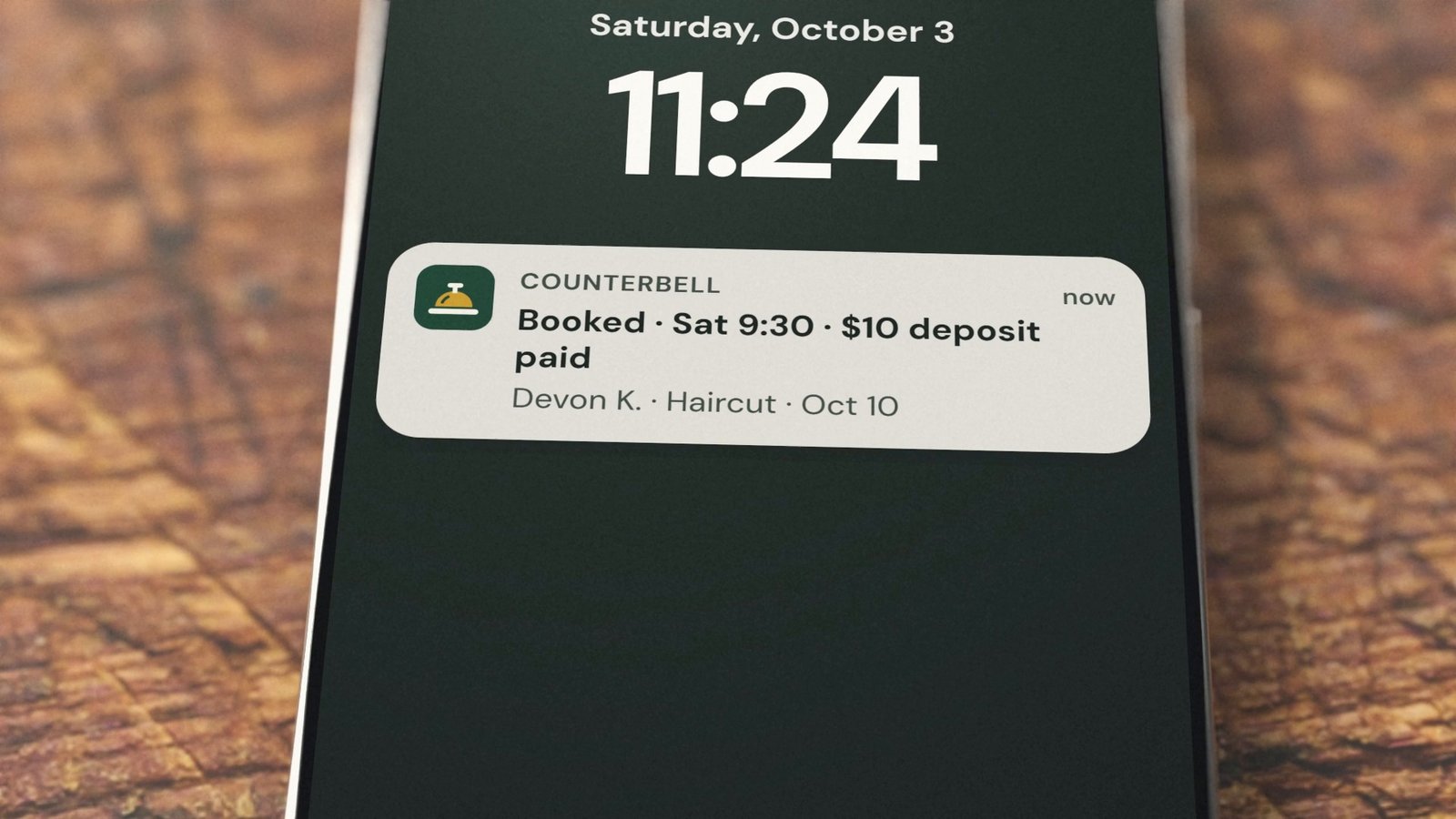
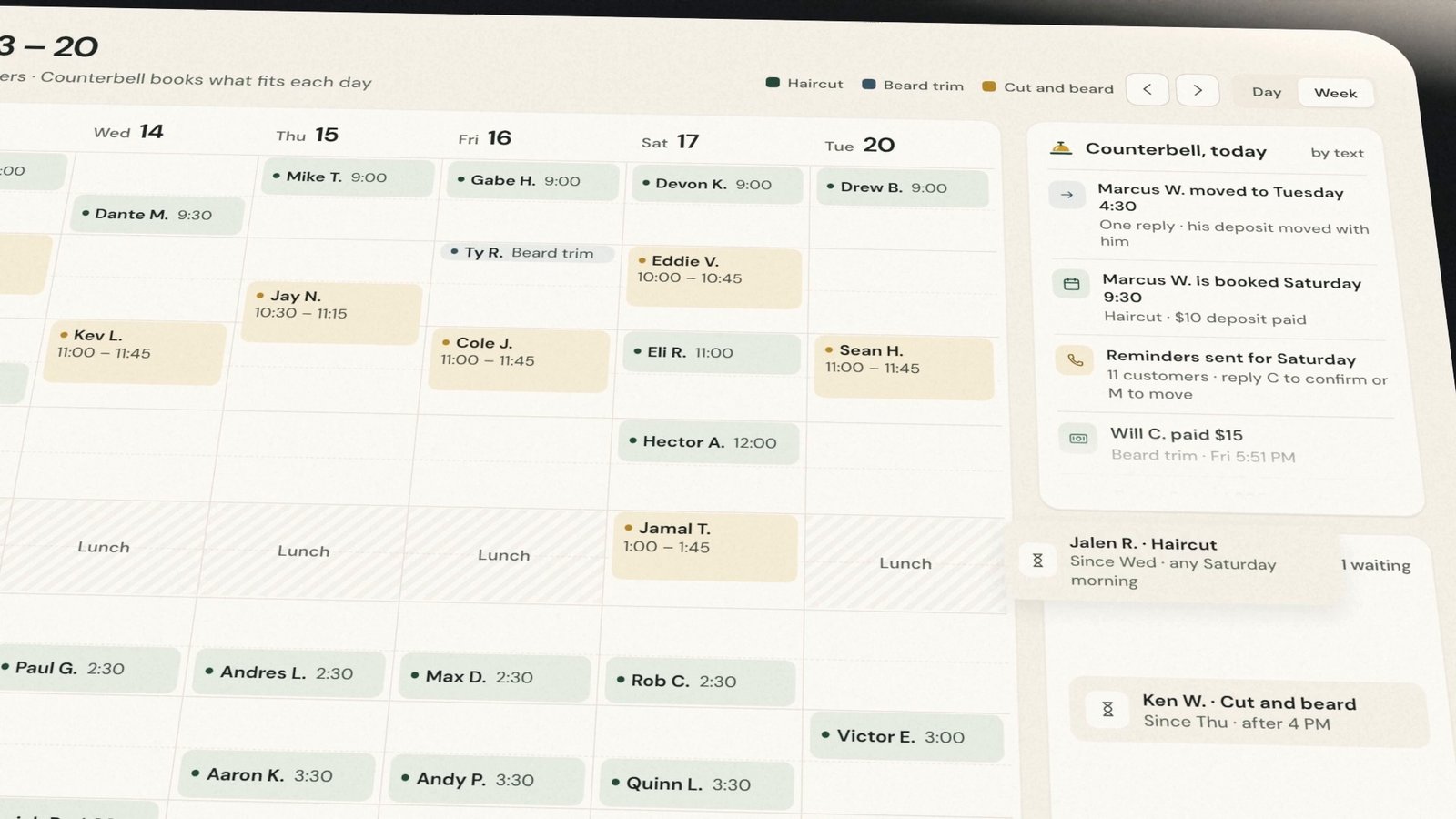
Hang every cut and every sound on its word.
Each of the six videos is a plan where every cut, title, caption, sound and insert hangs on a word of the voice, and the render executes it. One grade and one grain for everything, so the generated footage and the 3D share the same skin. Room tone under everything and each place's own bed, effects as short windows glued to their action, and music that ducks 13.5 LU under his voice and opens up in the silences, up to 9.5 LU in the story.
Look at every frame.
A frame from every shot, every cut three frames each side, and every title, caption and interface insert at full size, read and fixed in the plan, then rendered again: two rounds before delivery. After it, one round of notes on the verticals: every cut inside a shot now moves closer, step by step to the end of the shot.
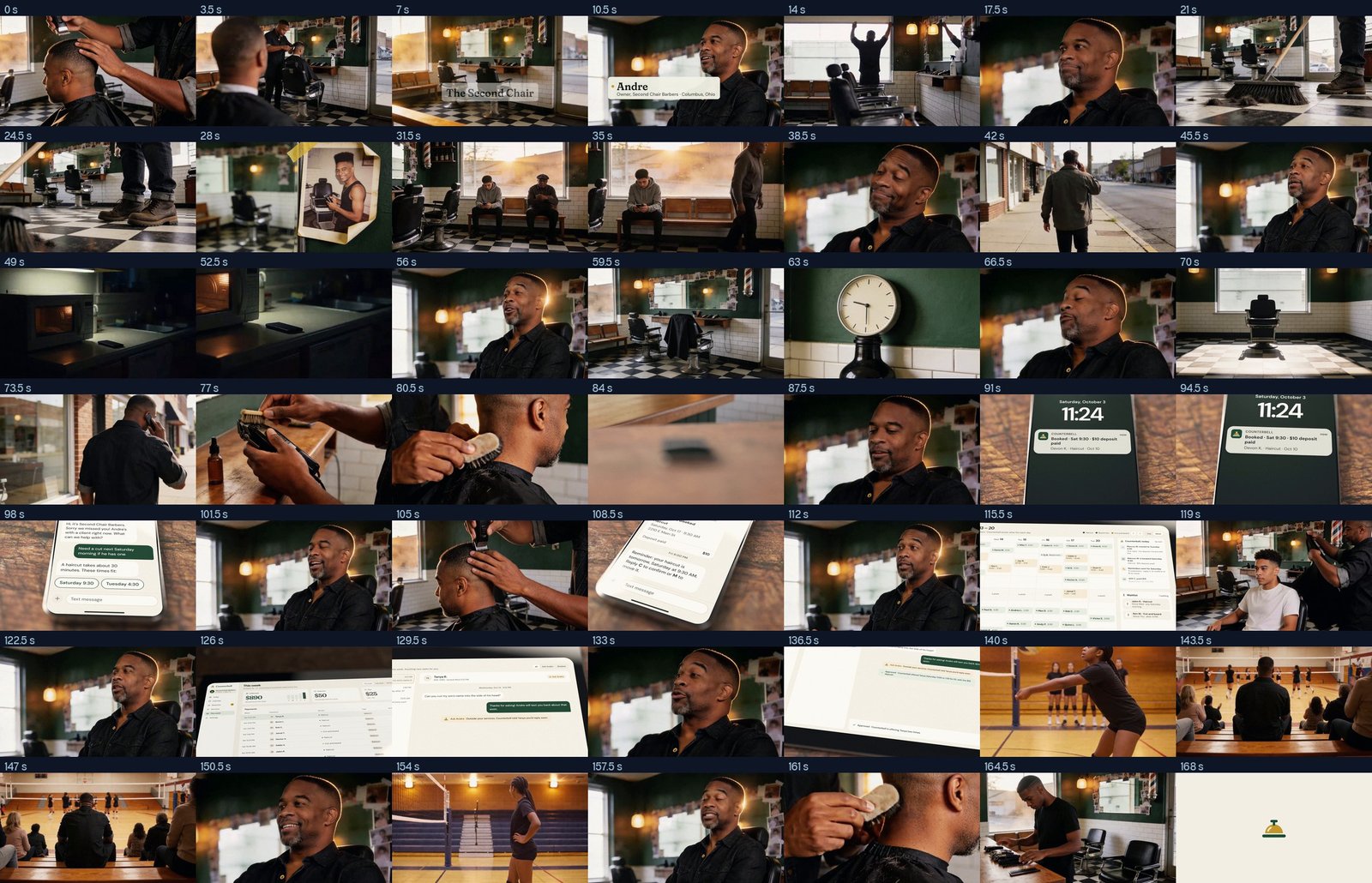
CONTACT SHEET · 49 FRAMES · ONE EVERY 3.5 S · SCROLL
Final and variants
| File | What | Size | fps | Length | Audio |
|---|---|---|---|---|---|
| secondchair-story-16x9.mp4 | the customer story, the whole interview | 1920×1080 | 24 | 170.71 s | AAC 48 kHz stereo |
| secondchair-testimonial-16x9.mp4 | the testimonial | 1920×1080 | 24 | 58.25 s | AAC 48 kHz stereo |
| secondchair-testimonial-9x16.mp4 | the testimonial, vertical, burned-in captions, opening on his face | 1080×1920 | 24 | 58.04 s | AAC 48 kHz stereo |
| secondchair-clip-01-four-oclock-9x16.mp4 | clip, “The four o'clock call”, burned-in captions | 1080×1920 | 24 | 29.38 s | AAC 48 kHz stereo |
| secondchair-clip-02-saturday-930-9x16.mp4 | clip, “Saturday, 9:30”, burned-in captions | 1080×1920 | 24 | 25.75 s | AAC 48 kHz stereo |
| secondchair-clip-03-wheres-your-phone-9x16.mp4 | clip, “Where's your phone?”, burned-in captions | 1080×1920 | 24 | 24.63 s | AAC 48 kHz stereo |
| secondchair-story-16x9-nomusic.mp4 | the story without music: voice, room and effects as mixed | 1920×1080 | 24 | 170.71 s | AAC 48 kHz stereo |
| secondchair-story-*.wav | stems: voice, music, ambience, effects and the mix | 48 kHz, 24-bit | 170.71 s each | stereo | |
| secondchair-story-16x9.srt and .vtt | 66 captions timed to the spoken words | ||||
| secondchair-story-chapters.txt | five chapters, one per block of the interview | ||||
| secondchair-raw-vs-final.mp4 | four on-camera moments side by side, as generated and finished, each heard both ways | 1920×1080 | 24 | 13.17 s | AAC 48 kHz stereo |
| the annotated transcript | the whole interview, marked with the cut each passage landed in and why | ||||
| *-cover.jpg | a cover for each video: his face in a moment of feeling, with a short line of his |
The MP4s are H.264 High, yuv420p, BT.709, 24 fps, with the index at the front for instant playback. Every video closes on the bell with a small line: Dramatization · AI-generated actor · Fictional brand.


Numbers
Measured on the delivered files.
| check | story | testimonial 16:9 | testimonial 9:16 | clips 1 / 2 / 3 |
|---|---|---|---|---|
| loudness (target −14 LUFS ±1) | −14.3 LUFS | −14.1 LUFS | −14.1 LUFS | −14.1 / −14.2 / −14.1 LUFS |
| true peak (max −1 dBTP) | −1.2 dBTP | −1.8 dBTP | −1.7 dBTP | −1.8 / −1.8 / −1.7 dBTP |
| voice over music while he speaks (12 to 15 LU) | +13.5 LU | +13.5 LU | +13.5 LU | +13.5 LU |
| music rising in silences of 1 s or more (6 to 10 LU) | +9.5 LU | +8.4 LU | +8.5 LU | clip 3: +7.5 LU; clips 1 and 2 have none |
| sound effects outside their image | 0.0 s, 13 effects | 0.0 s, 5 effects | 0.0 s, 10 effects | 0.0 s, 7 / 1 / 1 effects |
| captions and supers, worst offset from their word | 0 frames | 0 frames | 0 frames | 0 frames |
| captions inside the vertical safe band | n/a | n/a | 45 of 45 | 26 / 20 / 18 of the same |
| his head inside the frame, every on-camera check | 33 of 34 | 14 of 14 | 40 of 40 | 16 / 12 / 16 of the same |
| frames counted against length × fps | 4097 of 4097 | 1398 of 1398 | 1393 of 1393 | 705 / 618 / 591 of the same |
Against the customer stories we measured before writing it: on camera 29.8% of the story (20 to 38%, median 27); the longest on-camera moment 4.95 s (none over 6); his face at 7.3 s and his name said at 7.9 s, with the name super on screen from 8.3 s (7 to 15 s); B-roll on frame 0; the product on screen 19.3% of the story (15 to 20%); the median shot 2.7 s (2 to 3.3 s), and 1.0 to 1.2 s in the verticals (1 to 1.3 s).
The product appears in eight moments of the story, where the references show four to six, because the interview names eight things the product does and each moment carries the line that names it. didn't pass
In one of the 34 on-camera checks of the story, at 2:32, the top of his hair grazes the frame edge by 5 px, in the generated close-up itself. didn't pass
One man and one voice: a face-identity check puts all 17 on-camera moments on the same person as the character sheet and the two interview frames, and his voice measures as the same voice across all 41 passages. The voice sits on the generated mouths word by word: lip drift 0 ms at the median and 20 ms at the worst word, inside the −45 / +125 ms tolerance. The phone is the same model, materials and texture as in the launch video.
Readable: the name super at a 73.5 px cap height on 1080 and the title at 78 px, with 13:1 contrast against the worst background behind their plate; the vertical captions on a 68 px line. The voice, transcribed back against the script, gives a 1.3% average word error; the worst passage, 20%, is a word repeated in the take that the edit cuts out.
The stems line up with the mix to the sample; their sum differs from it by −21.2 dB, the master limiter's work. The 3D sets hold under 0.35 levels of single-frame flicker once the camera move is compensated.
No views, clicks or conversions: the videos have not run.
What we did
Script (on a research report on how customer stories are built and paced), the character, the casting of his voice, direction, the interface, 3D, edit, sound and the documentary deliverables. The on-camera moments, the B-roll, the interface recordings, the 3D inserts, the six edits and the mix were made in FireNgine, our production system, with the 3D rendered in Blender.
Provenance
Generated: the actor, his voice and part of the footage. The rest is licensed or made in FireNgine. The phone and the tablet are 3D, rendered in Blender.
Source files
Available on request: the edit of each video as a timeline your own editor can open, and the annotated transcript.
Have a script, a voice-overor a product to launch?
Send a short brief or write to us. We'll come back with questions, then one central idea for the piece before anything is made.
hello@firendev.com